Planning a successful trade show involves much more than creating an attractive booth. Behind every impressive exhibit is a well-organized logistics strategy that ensures every display component, graphic, piece of furniture, and technology arrives on time, is installed correctly, and is dismantled efficiently once the event concludes.
Orlando is one of the leading trade show destinations in the United States, hosting hundreds of conventions, exhibitions, and corporate events each year. Whether you’re launching a new product, increasing brand awareness, or generating qualified leads, effective logistics planning can significantly impact your overall success.
This guide explains how to plan logistics for custom exhibit rentals in Orlando, covering everything from transportation and venue coordination to installation, dismantling, and post-show management.
Why Logistics Planning Matters for Custom Exhibits
Custom exhibits often include multiple elements such as branded structures, graphics, lighting, technology, furniture, and product displays, especially with solutions like a 10×20 custom exhibit rental in Orlando. Managing these components requires coordination between different teams and suppliers.
Without proper planning, exhibitors may experience problems such as delayed shipments, missing materials, incorrect booth placement, or rushed installation.
A strong logistics strategy helps ensure:
- All booth components arrive safely and on schedule
- Installation teams have enough time to complete setup
- Venue rules and deadlines are followed
- Products and marketing materials are prepared
- The exhibit is ready before the event begins
Good logistics planning and end-to-end event logistics management create a smoother experience and reduce stress for your event team.
Start Planning Early for Your Orlando Trade Show
The best time to begin logistics planning depends on the size and complexity of your exhibit. Larger custom displays require more preparation because they involve design approvals, production timelines, shipping arrangements, and installation coordination.
Waiting until the last minute can create unnecessary challenges, especially during busy trade show seasons in Orlando.
A typical planning timeline should include:
- Reviewing event dates and venue requirements
- Confirming booth size and location
- Approving exhibit designs and graphics
- Scheduling transportation and installation
- Preparing marketing materials and products
Starting early gives your team enough time to handle changes and make decisions without pressure.
Understanding Transportation and Shipping Requirements
Transportation plays a major role in exhibit logistics. Custom booths often include large structures and specialized materials that need careful handling.
Before shipping your exhibit, it is important to understand the venue’s requirements, including delivery schedules, receiving procedures, and material handling rules.
Important shipping considerations include:
- Choosing the right shipping method based on deadlines
- Confirming advance warehouse or direct-to-show delivery options
- Tracking shipments before arrival
- Preparing inventory lists for all booth components
- Planning return transportation after the event
A clear shipping plan helps prevent delays and ensures your exhibit arrives ready for installation.
Coordinating With the Venue and Show Organizers
Every trade show venue has specific guidelines that exhibitors must follow. These requirements may include installation hours, labor regulations, safety rules, and display restrictions.
Orlando hosts many large conventions, and venues such as the Orange County Convention Center often have detailed procedures for exhibitors.
Before the event, confirm:
- Booth construction rules
- Electrical and internet requirements
- Setup and dismantling schedules
- Required paperwork and approvals
- Vendor access information
Proper communication with show organizers helps avoid last-minute complications.
Managing Custom Exhibit Installation
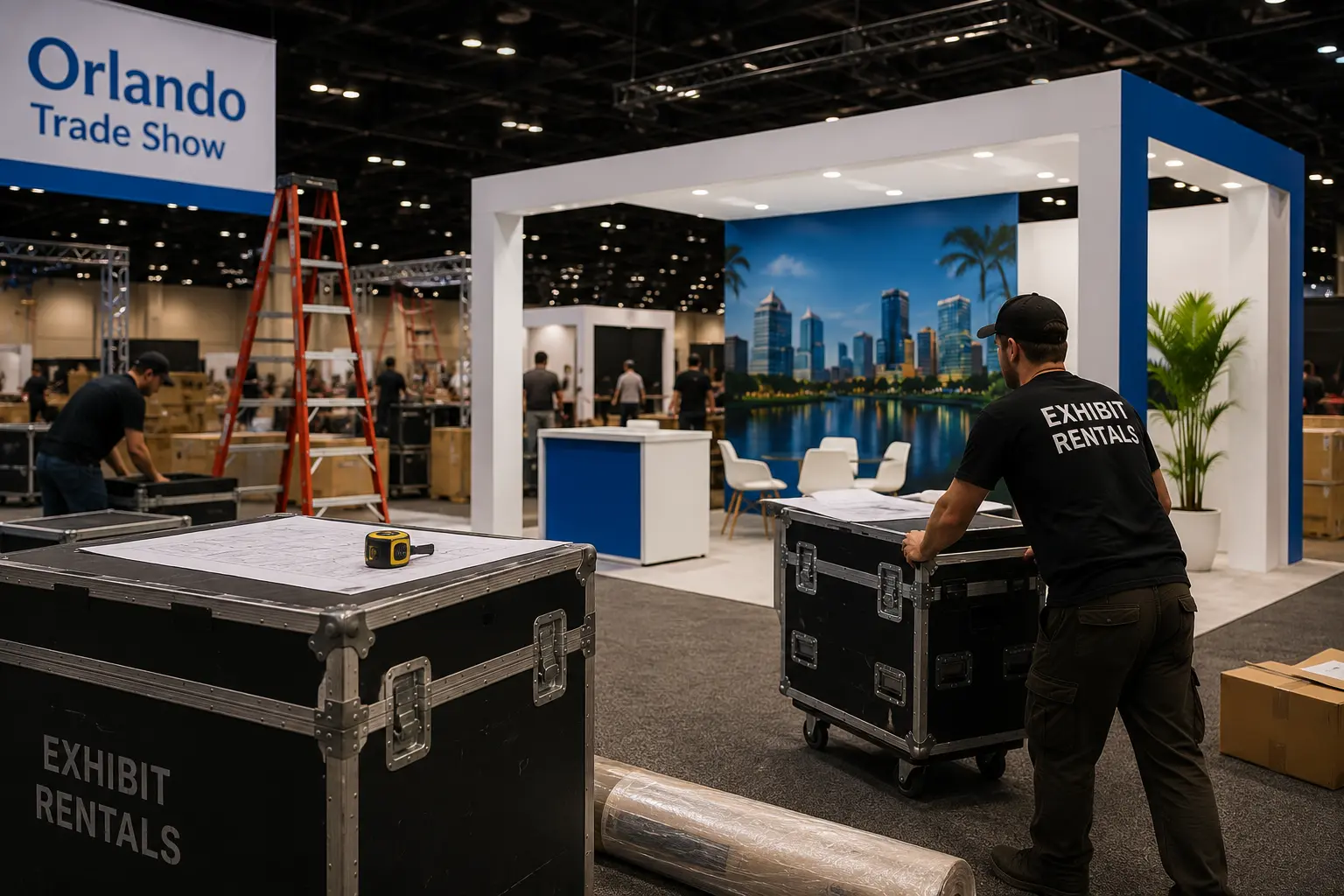
Installation is one of the most important stages of the exhibit process, and following a trade show booth installation and dismantling plan helps prevent delays. A custom booth requires careful assembly to make sure every element looks professional and functions correctly.
The installation process may involve:
- Building booth structures
- Installing branded graphics
- Setting up lighting and technology
- Arranging furniture and displays
- Testing equipment before opening
Experienced exhibit teams understand how to work within tight deadlines while following venue standards. This allows exhibitors to focus on preparing their staff instead of managing construction details.
Planning Graphics, Products, and Booth Materials
Custom exhibits often include more than the booth structure. Graphics, promotional materials, product samples, and technology all need to be organized before the event.
A missing banner or misplaced product display can affect the visitor experience.
Before shipping materials, create a checklist that includes:
- Printed graphics and signage
- Product samples or demonstrations
- Brochures and promotional items
- Lead capture tools
- Technology equipment and accessories
An organized inventory system makes setup faster and helps your team know where everything belongs.
Handling Installation and Dismantling After the Event
Many exhibitors focus heavily on getting their booth ready but overlook the importance of the breakdown process.
A proper dismantling plan ensures materials are packed correctly and prepared for transportation.
After the event, teams should:
- Confirm dismantling schedules
- Protect booth materials during packing
- Review inventory before shipping
- Arrange transportation back to storage or the next event
Professional logistics support can simplify this process and reduce the risk of damaged or missing items.
Common Logistics Mistakes to Avoid
Even experienced exhibitors can face challenges when logistics are not planned carefully. Small mistakes can create delays that affect the entire event experience.
Some common mistakes include:
- Not confirming venue deadlines early
- Underestimating shipping timelines
- Forgetting to prepare backup plans
- Failing to review booth requirements
- Not coordinating between vendors and event teams
A detailed plan helps identify potential problems before they happen and gives exhibitors a better understanding of trade show exhibiting costs in Orlando.
How Exhibit Partners Help Manage Event Logistics
Managing a custom exhibit involves many moving parts. Working with an experienced exhibit partner can simplify the process by coordinating different services under one plan.
A reliable partner offering custom exhibits in Orlando can assist with design coordination, transportation, installation, and dismantling while making sure your booth meets event requirements.
Orlando Exhibit Rentals helps businesses manage the details involved in creating professional trade show experiences, from initial planning through final booth completion.
Having the right support allows your team to spend more time engaging with visitors and less time managing logistics challenges.
Final Thoughts
Successful trade shows are built on careful planning, efficient coordination, and reliable execution. While an attractive booth helps capture attention, well-managed logistics ensure your exhibit is delivered, installed, operated, and dismantled without unnecessary stress or unexpected costs.
By planning early, understanding venue requirements, organizing transportation, coordinating installation, preparing for contingencies, and managing post-show logistics, businesses can create a smooth exhibition experience while maximizing their return on investment.
Whether you’re attending your first Orlando trade show or managing multiple events throughout the year, investing in a strong logistics strategy will help your team stay organized and present your brand professionally from start to finish.
Ready to Simplify Your Next Orlando Trade Show?
Planning exhibit logistics doesn’t have to be complicated. A trusted exhibit rental partner can help manage every stage of your project, including custom booth design, transportation, installation, dismantling, and on-site coordination.
If you’re preparing for an upcoming Orlando trade show, start planning early and work with experienced professionals who can ensure your exhibit is delivered on time, installed efficiently, and ready to make a lasting impression on your audience.
Frequently Asked Questions
How early should I plan logistics for a custom exhibit rental?
Most companies should begin logistics planning several months before their trade show. Early preparation allows enough time for design, shipping, approvals, and installation coordination.
What logistics services are included with exhibit rentals?
Services may include transportation coordination, booth installation, dismantling, inventory management, and support with venue requirements depending on the rental provider.
How do custom exhibits handle shipping and storage?
Custom exhibit providers coordinate shipping schedules, material handling, and storage options to make sure booth components arrive safely and are available when needed.
Why is venue coordination important for trade show logistics?
Venue coordination ensures exhibitors follow installation rules, deadlines, safety requirements, and access procedures. This helps prevent delays and keeps the setup process organized.
Can a rental company manage the complete exhibit logistics process?
Yes, many exhibit rental companies provide complete support from planning and transportation to installation and dismantling through turnkey exhibit rental services.
CONTACT US
AND AN EXHIBIT EXPERT WILL GET BACK TO YOU SHORTLY!
