A trade show is one of the fastest ways to put a brand in front of real buyers. It lets a company demonstrate products face to face, build relationships, and generate leads that a website or ad campaign simply can’t replicate. At Orlando Exhibit Rentals, we see this play out at nearly every show we support, but that opportunity only pays off if the booth itself is planned well. One wrong call on layout, location, or timing can quietly waste an entire event budget.
Whether it’s a company’s first show or its fiftieth, avoiding a handful of predictable mistakes is what separates a booth that generates real leads from one that just takes up floor space. Here are the five most common missteps businesses make with trade show booth rental Orlando, and how to sidestep each one.
1. Walking In Without a Clear Goal
Many exhibitors show up, set up a display, hand out flyers, and hope for the best. Without a defined goal, there’s no way to shape the booth, brief the staff, or measure whether the event actually worked.
Before renting anything, decide what success looks like. Is the goal brand awareness, a product launch, lead generation, or attracting investors? That answer should drive everything else. A lead-generation goal calls for digital sign-up stations, QR codes, and clear staff scripts. A product launch calls for strong lighting, a demo area, and an interactive centerpiece. Write the top objective down before booking a rental, and let it steer the theme, message, and layout.
2. Getting Your Trade Show Booth Rental Size or Location Wrong
Size and placement have an outsized effect on booth performance, yet many companies choose based on price alone and regret it later. A booth that’s too small limits how many visitors can comfortably stop in, while an oversized one can look empty if it isn’t styled to fill the space. Location matters just as much: a corner far from entrances or high-traffic zones will pull noticeably less foot traffic than a spot near an entrance, food court, or gallery.
Before locking in a rental, study the venue’s floor plan. If the goal is a compact, budget-friendly footprint, a 10×10 trade show booth is a solid starting point. Growing brands that need more room for demos and conversations often move up to a 20×20 or 20×30 trade show exhibit, while companies wanting a commanding presence at a flagship event look at a 30×30 or 30×40 island. A local provider such as Orlando Exhibit Rentals can also help pick a location that gets the booth seen, not just booked.
3. Weak Booth Design and Visual Appeal
A booth’s design is the first impression a visitor forms, often before a single word is exchanged. Clutter, mismatched colors, or an outdated layout can undercut even a strong product. The fix is discipline: keep the space clean, on-brand, and easy to read from a distance.
A few habits separate booths that stop foot traffic from ones that get walked past. Strong lighting and bold visuals draw the eye first. Messaging should be short enough to read in a few seconds, not a paragraph. The main product or service belongs at eye level, not tucked on a low shelf. And one interactive element, whether a live demo or a touchscreen, gives visitors a reason to stop rather than just glance. Businesses that want a fully custom look built around their brand can explore Orlando custom exhibits instead of a standard package.
4. Skipping Pre-Show Promotion
A well-built booth won’t draw a crowd if nobody knows it’s there. Promotion needs to start weeks before the event, not the morning of. Share updates on LinkedIn and Instagram, send personalized invitations to key clients and prospects, and build some anticipation with a small contest or early-access offer tied to the show.
An email list is one of the most underused tools here. A simple “we’ll be there” message with the booth number, theme, and any on-site offers can meaningfully boost turnout. Teasing the booth design ahead of time builds curiosity and gives people a reason to seek it out once they’re on the floor.
5. Skipping the Post-Show Follow-Up
The event isn’t over when the booth comes down. Leads collected at a show lose value fast if they sit untouched, yet this is one of the most common mistakes exhibitors make.
A simple post-show plan fixes this: send personalized thank-you emails soon after the event, follow up with an offer or resource tied to what each visitor was interested in, and use a CRM or lead-tracking tool to keep the process organized. Without this step, even a perfectly executed booth can end up producing very little return.
Why Work with a Local Rental Provider In Orlando
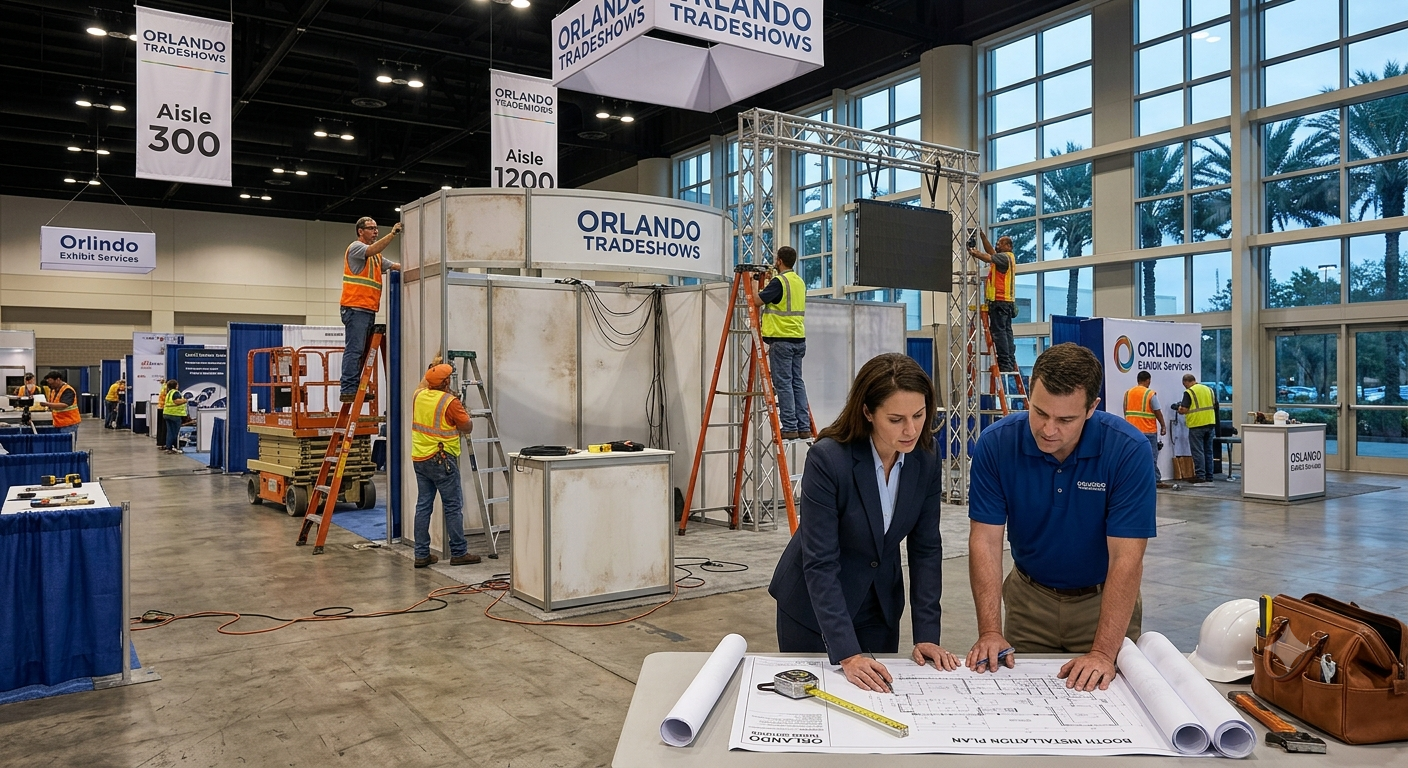
Partnering with an experienced local exhibit rental provider can simplify the entire trade show process. Local providers know the venues, understand attendee traffic patterns, and manage the logistics of delivery, setup, and teardown. This allows businesses to focus on engaging visitors instead of coordinating installation, transportation, and dismantling. They can also recommend booth layouts and locations that align with your event goals and budget. For companies weighing whether to rent or build, our guide on renting versus buying an exhibit breaks down which option fits different show schedules.
Final Word
A trade show can be one of the highest-return marketing investments a company makes, but only when the booth is planned with intention. Set a clear goal, pick the right size and location, design with purpose, promote ahead of time, and follow up fast. Pair that with an experienced trade show booth rental Orlando provider, and the booth stops being just a display. It becomes the thing that turns a show floor into real business. Request a quote to start planning a booth built around your next event.
Frequently Asked Questions
What's the most important thing to figure out before renting a trade show booth?
Start with the goal: leads, sales, or brand awareness. That decision shapes the right booth size, design, and staffing plan before anything else is booked.
How can a booth stand out on a crowded show floor?
Keep it clean and visually bold. Strong lighting, a digital display, and one interactive element go a long way toward pulling in walk-up traffic.
Is renting a better option than buying an exhibit?
For most exhibitors, yes. Renting is more budget-friendly and lets a company change its look between shows, which matters if a brand or product line evolves year to year.
How is trade show success actually measured?
Venue coordination ensures exhibitors follow installation rules, deadlines, safety requirements, and access procedures. This helps prevent delays and keeps the setup process organized.
What trends are shaping trade show marketing going forward?
Expect more digital integration, from QR-driven lead capture to hybrid online-offline experiences, along with a growing focus on sustainable, reusable booth materials.
CONTACT US
AND AN EXHIBIT EXPERT WILL GET BACK TO YOU SHORTLY!
